How to Potty Train a Rottweiler Puppy
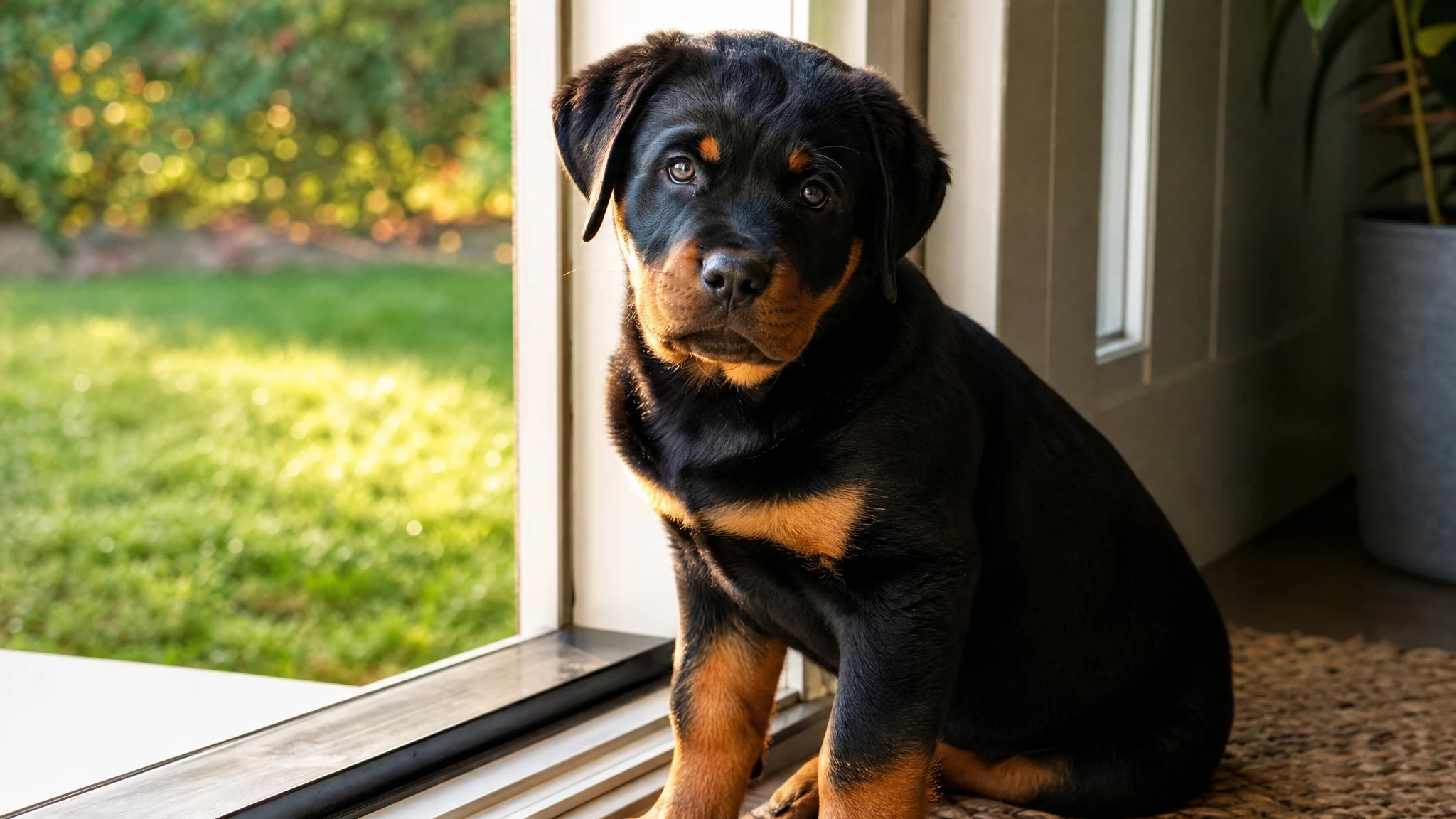
General training information. Every dog is an individual; for health or behavior concerns, see your veterinarian.
A Rottweiler puppy is cute for about a day before you notice the size of the problem. This is a breed that can reach roughly 100 pounds as an adult, so the habits you build now are the ones you will live with later. The good news is that rottweiler potty training is mostly about routine, patience and paying attention.
This guide shows how to potty train a Rottweiler with a simple schedule, a crate, plenty of rewards and a calm response to accidents. It also covers what the breed's own sources say about size, trainability and sensitivity, because those details shape how you do the work.
Why Rottweilers Often Take to House Training Well
The AKC rates the Rottweiler 5 out of 5 for trainability, on a scale where 5 means eager to please. The AKC also describes the breed as intelligent and highly trainable. It adds that some dogs may be stubborn, so individual puppies vary.
The AKC also notes that Rottweilers are "people dogs" that do poorly when isolated from humans. That matters for house training. A puppy who lives close to the family gets more chances to be caught at the right moment and rewarded. A puppy left alone for long stretches has more chances to make mistakes.
The American Rottweiler Club (ARC) says training must start early and continue for life because of the adult dog's size and strength. House training is the first step in that long process.
Materials You Will Need
You do not need much. Gather these before the puppy comes home.
- A crate sized so the puppy can stand, turn around and lie down. Rottweilers grow fast, so many owners buy a large crate with a divider and move it as the puppy grows.
- A leash and a flat collar or harness for trips to the potty spot.
- Small, soft treats that the puppy can swallow in a second. Use pieces of the puppy's regular food if that works for your dog.
- An enzyme-based cleaner made for pet accidents, so the smell does not draw the puppy back to the same spot.
- A fenced or contained potty area if you have one. The ARC recommends a yard, ideally with a six-foot fence, and calls it essential for a puppy or young dog.
- A notebook or phone note to log meals, naps and potty trips for the first week or two.
- Old towels and paper towels for the accidents that will happen.
Step-by-Step: How to Potty Train a Rottweiler
Step 1: Pick one potty spot and one cue
Choose a single patch of yard or one spot near the door. Take the puppy there on a leash every time, even if you have a fenced yard. The leash keeps the trip boring and focused.
Pick a short cue such as "go potty" and say it once, calmly, as the puppy starts to go. Over time the words become a signal.
Step 2: Build a schedule around the puppy's day
Young puppies need frequent trips. Your veterinarian can tell you how long your own puppy can reasonably wait at its age and stage, and no breed source we rely on gives a Rottweiler-specific bladder timetable. So build the schedule from your puppy's behavior and keep the gaps short at first.
Take the puppy out at these times:
- First thing in the morning, before anything else.
- Right after each meal.
- After waking from every nap.
- After a play session or training session.
- Just before bed.
- Any time the puppy sniffs in circles, whines, or heads for a corner.
Feed at set times each day. A predictable feeding schedule makes potty times more predictable too. Ask your veterinarian about how much to feed and when, since that depends on the individual puppy.
Step 3: Go out, wait, and reward right away
At the potty spot, stand still and let the puppy sniff. Do not play or chat. If nothing happens after a few minutes, go back inside, keep the puppy in the crate or right beside you, and try again soon.
When the puppy goes, say your cue quietly and give a treat and calm praise the moment the puppy finishes. The reward has to come while the puppy is still outside. If you wait until you are back in the house, the puppy will not connect the treat with the act.
Step 4: Use the crate as a resting place, not a punishment
Dogs generally avoid soiling the area where they sleep, which is why a properly sized crate helps. Use it for naps and for times you cannot watch the puppy closely. Make it comfortable and pair it with treats and chew toys.
Do not shut a puppy in a crate for longer than it can hold its bladder. If you have to be away, arrange a break from a family member or a trusted helper. Because the AKC says Rottweilers do poorly when isolated from people, avoid long stretches of crating or being left alone. A crate is a tool for short rests, not a place to store the puppy.
When the puppy is out of the crate and not on a potty trip, keep it in the same room with you. A leash tied to your belt, or a baby gate, helps you catch the early signs.
Step 5: Supervise, and stop accidents before they start
Most accidents happen when no one is watching. Treat indoor time as supervised time. If you cannot watch the puppy, it goes in the crate or a safe, gated area.
Watch for sniffing, circling, sudden wandering off, or standing at the door. When you see one, calmly clip on the leash and head outside.
Step 6: Handle accidents without punishment
If you see the puppy start to go inside, make a short, neutral sound to interrupt, scoop the puppy up or lead it out, and finish outside. Reward if it finishes at the potty spot.
If you find the mess later, clean it with an enzyme cleaner and say nothing to the puppy. A puppy cannot connect a scolding to something that happened minutes ago. Rubbing a nose in a mess, yelling, or any physical correction teaches the puppy to hide when it needs to go, which makes house training harder.
This matters even more with this breed. The ARC says Rottweilers do best with sensitive, positive methods, and that time and patience count for more than physical mastery. The AKC says discipline should be consistent, fair and firm, but not rough. The ARC's guide to finding a trainer also lists positive reinforcement as what to look for in a class. That fits the reward-based approach supported by the American Veterinary Society of Animal Behavior (AVSAB).
Step 7: Stretch the time between trips slowly
When the puppy has several accident-free days, add a little more time between trips. If accidents return, go back to the shorter gaps. Moving back a step is not failure. It is how most puppies learn.
Gradually give more freedom in the house, one room at a time. Keep the potty routine going even after the puppy seems reliable.
Step 8: Teach the signal to ask to go out
Many puppies start to signal on their own by standing at the door, or you can help. Each time you head out, ring a bell hung at nose height or say your cue at the door. Reward the puppy for touching the bell. Always respond when it rings, or the bell stops meaning anything.
Tips for a Rottweiler Puppy in Particular
Plan for size early
The AKC lists adult males at 95 to 135 pounds and females at 80 to 100 pounds. The American Rottweiler Club gives somewhat lower ranges, 95 to 125 pounds for males and 75 to 95 pounds for females. Either way, this is a large dog. The ARC notes that a puppy should be discouraged from jumping on and grabbing at children while small, because an adult may reach 100 pounds.
The same thinking applies to potty habits. A habit like going on the rug or at the front door may seem minor in a small puppy but is a much bigger problem in a grown dog. Be consistent from day one.
Keep rewards calm and training sessions short
The AKC rates the breed 4 out of 5 for playfulness and 5 out of 5 for mental stimulation needs. A puppy that gets excited easily may forget to go once outside. Keep the potty trip quiet. Save play for after the puppy has finished.
Give daily exercise and mental work too. The ARC warns that puppies and adults need socialization, exercise and mental challenges, or they may become destructive. A bored puppy tends to have more accidents and chew more.
Watch the weather
The ARC notes that Rottweilers can be susceptible to heat stroke, linked to the black coat and short muzzle. In hot weather, keep potty trips short and shaded, and bring water. Ask your veterinarian about warning signs and what to do.
Use the early weeks for socialization too
The ARC recommends a group class with an experienced trainer who uses positive reinforcement, and suggests Puppy Kindergarten for socialization. Ask your veterinarian about when it is safe for your puppy to go to class and meet other dogs. Potty trips are a good chance to practice calm behavior around the house and yard, too.
Do not rough-house at potty time
The AKC says roughhousing may encourage aggression in this breed. Keep potty trips and cleanup calm and gentle, and handle the puppy kindly. The ARC says well-adjusted puppies are playful, inquisitive and trusting and accept gentle handling, which also makes leash-up and cleanup easier.
Common Mistakes to Avoid
- Punishing after the fact. The puppy will not understand, and it may learn to avoid going in front of you.
- Giving too much freedom too soon. Open run of the house leads to hidden accidents. Add space slowly.
- Skipping the leash in a fenced yard. Without the leash, the trip becomes playtime and you cannot tell whether the puppy went.
- Rewarding late. A treat given inside the house does not teach what happened outside.
- Leaving the puppy alone for long stretches. The AKC notes that the breed does poorly when isolated from people.
- Using harsh tools or rough handling. The ARC's guide to choosing a trainer lists prong, choke and electronic collars among the tools you do not want to see in a class. Rough methods do not belong in house training either.
- Cleaning with ordinary household cleaners. Some leave a scent the puppy can still detect. Use an enzyme cleaner made for pet messes.
- Not logging the first weeks. A short log shows you the puppy's pattern and helps you time trips.
What Results to Expect
Every puppy learns at its own pace. Many puppies start to show a pattern within the first few weeks of a steady routine, and many owners find that accidents become less frequent over the following weeks and months. Some puppies take longer, especially if the routine changes or if the puppy is still very young.
We do not have a breed-specific timeline from the AKC or the American Rottweiler Club, so treat any number you hear as a rough guess. Do not measure your puppy against another dog. If progress stalls, or if the puppy strains, has frequent accidents, or seems to be in discomfort, ask your veterinarian. A health problem can look like a training problem.
Reliable habits in the house usually come from many weeks of repetition. Keep the routine going even after the puppy seems to have it figured out, and expect an occasional slip during growth spurts, changes in routine, or new surroundings.
Where House Training Fits in the Bigger Picture
Potty training is the first lesson of many. The ARC says obedience training is a must for the breed, and the AKC says to start early with socialization, basic classes and living in the home. For the full picture of what comes next, see our complete guide to training a Rottweiler.
The AKC describes the Rottweiler as a loyal, loving, confident guardian, and rates it 5 out of 5 for affection with family. A puppy who is trained kindly from the start tends to build trust with the people it lives with. Plan on patience, a clear routine and plenty of praise, and expect the work to pay off over time.